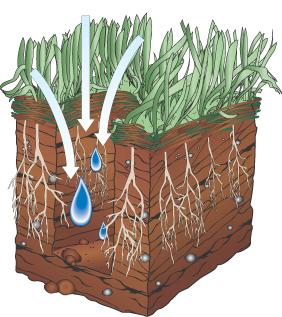
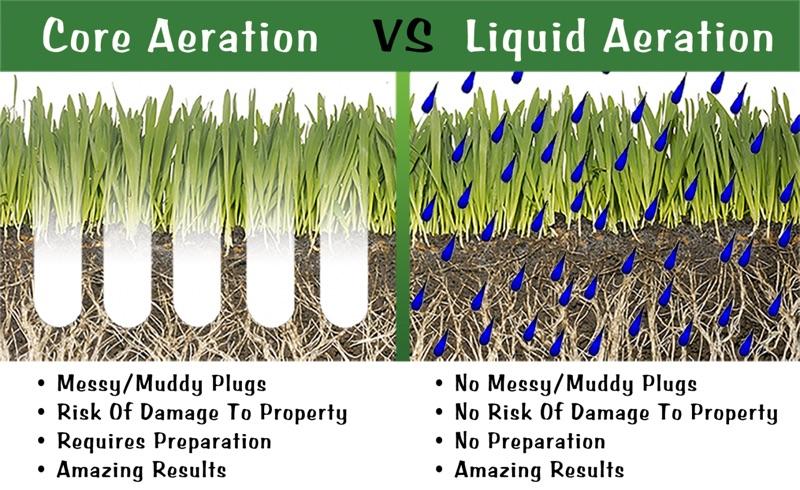
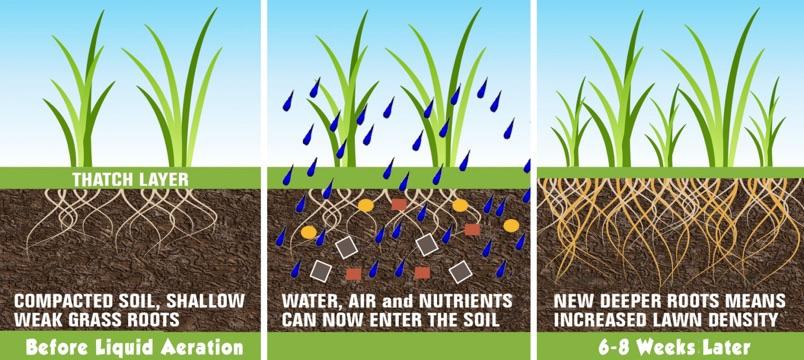
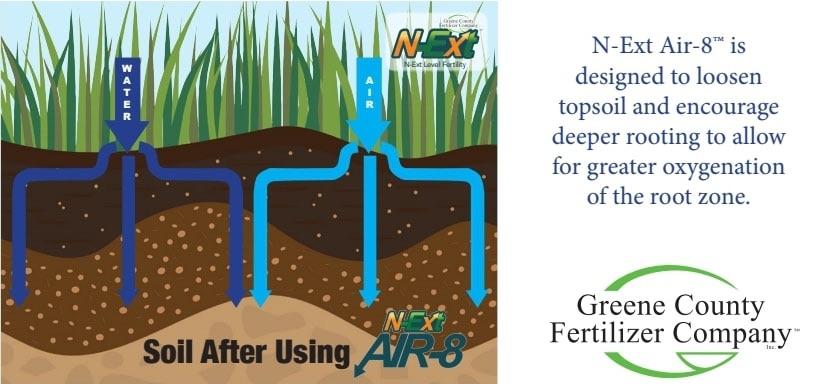
Liquid aeration uses carbon substances like ash, humic shale, kelp and bio char in solution with soil nutrients to create micro-fissures (think “Pop rocks” ) and to establish healthy bacteria that bring about better nutrient retention, water holding capacity and healthier soil and healthier grass.
In the past, the jury was out on the effectiveness of liquid aeration, but a recent study at University of Georgia Turf Program is showing that liquid aeration is as effective as mechanical aeration for water retention, nutrient retention and producing healthier soil, however, core aeration remains the preferred treatment for severe soil compaction. Additional benefits can be seen from having BOTH core and liquid aeration.