Grub facts

This is the time of year that we start to see grub damage in lawns. It is important to know the facts
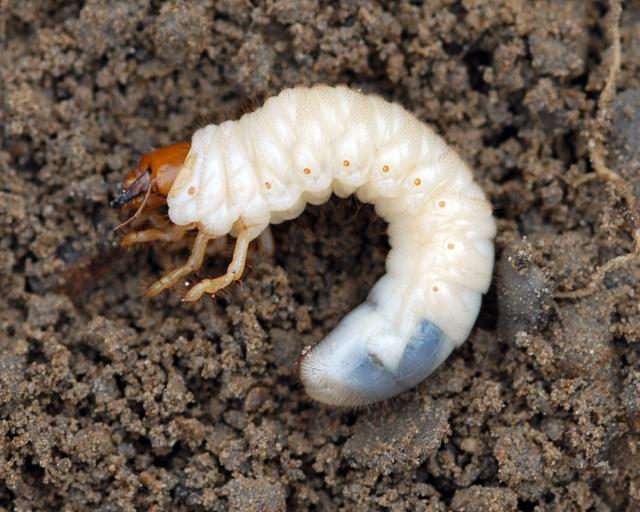
grub1.jpg
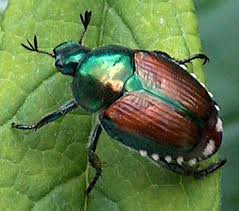
japanesebeetle.jpeg

Most of the grubs in our area are the larval form of the Japanese beetle

Grub prevention is used in many cases to prevent the development of Japanese beetle larva to reduce the number of grubs that can cause damage by feeding on the grass roots.

Unfortunately, grub prevention is not expected to prevent EVERY grub (just as a vaccine does not prevent EVERYONE from getting sick– a bit of a hot topic right now).

With grubs, the “industry standard” for the “damage threshold” for healthy lawns is approximately 8-10 grubs per square foot or more. If you are seeing fewer than 8 grubs per square foot, you will generally not see damage to healthy turf. With stressed or unhealthy turf with poor care practices, we can see damage with a much lower number of grubs. This is important because just seeing 1 or 2 grubs in a healthy lawn is not a huge concern if you are not seeing damage to the turf.

While we have seen significantly more insect issues this year due to the heat and drought, one “good news” about the drought is that we are seeing fewer grubs in dry lawns since the eggs actually need moisture in the soil in order to develop.

(There are some grubs that are the larval form of the May-June beetle, masked chafer, European beetle, Green-June beetle, but these are fairly rare in our area.)

FACTS & MYTHS:

Grub damage to the turf can be quite severe, but there are many misconceptions. Here are some important facts and myths:

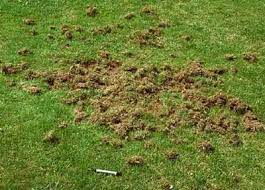
skunk digging.jpeg
Animal Digging activity (Skunks, Raccoons, Moles) means that you have grubs: MYTH

While skunks, raccoons and moles DO like to eat and look for grubs in the turf, they can dig and tear up a lawn looking for earthworms and many other insects and larva. As the weather starts to get cooler, these animals start to find these meals in the soil. Unfortunately, grub prevention does NOT prevent all animal digging activity, since it is intended to prevent the threshold number of grubs for damage to the turf and not to prevent ALL grubs.

With recent booms of skunk populations in the Western Suburbs, we are seeing significantly higher reports of animal turf damage. In many of these cases, not a single grub is found. Sometimes there were no grubs there and other times animals have already eaten the few grubs that were present.

With the drought conditions this summer, there are fewer grubs overall, so animal activity may be more intense as the animals are looking for calories going into winter with less food available.

It is important to know that applying an insecticide treatment to “kill the grubs” will not stop animal digging in many cases, so applying a treatment when no grubs are present is not appropriate.

There are all sorts of repellents and treatments on the market to help with animal activity in your lawn. Most of these are NOT effective. The most effective thing that we have found is activity in the lawn (dogs and people) AND Motion Sensor Sprinklers. Motion sensor sprinklers use just a cup of water in most cases and can be adjusted for both time and sensitivity. This is a great way to scare the animals away without using unnecessary chemicals.

If you have dead grass/bare areas/thin areas, you MUST have grubs: MYTH

All through the spring and summer, we hear from homeowners that a neighbor or mower has told them that they “must have grubs.”

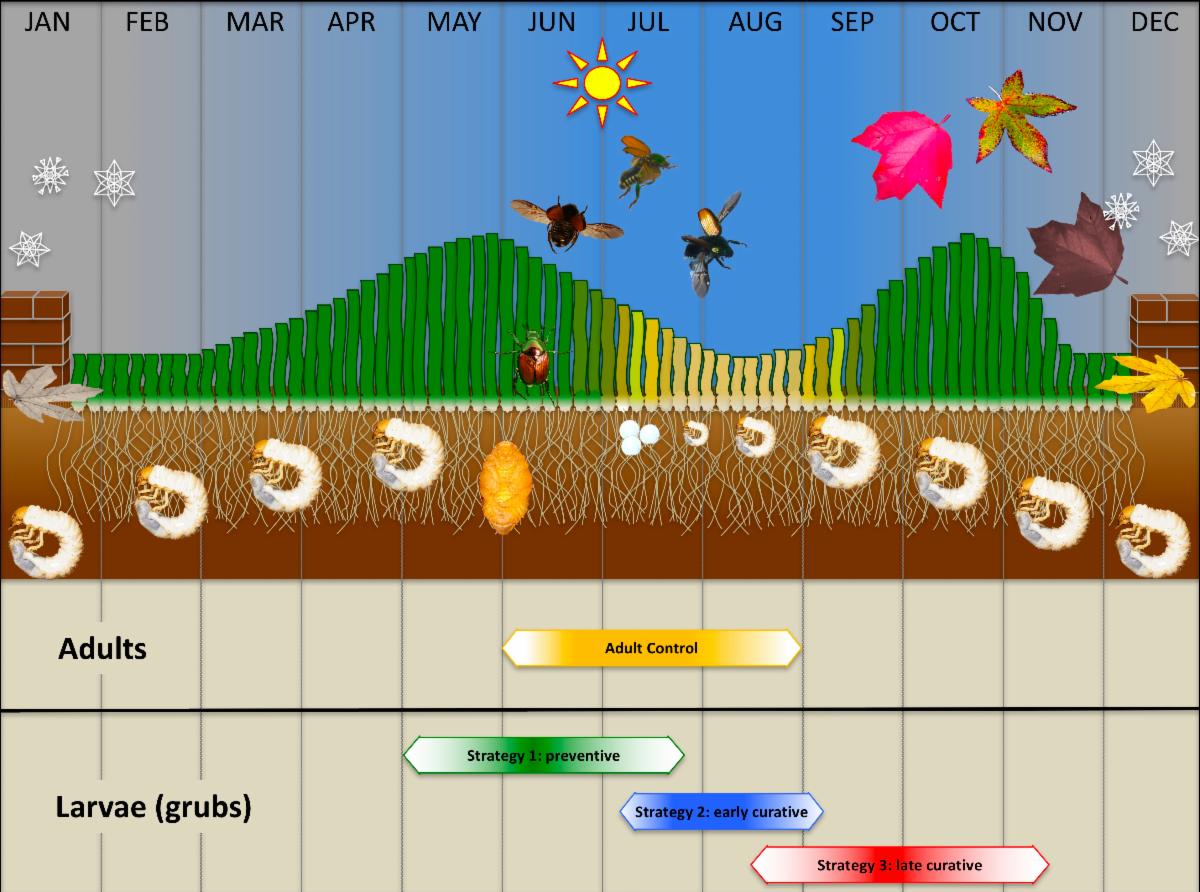
With the Japanese Beetle Life cycle, September to October is normally the time of year that we see turf damage from Japanese beetle grubs in our area. We can see animal digging activity in the spring, but the turf damage (brown grass, pulling up like sod) is only seen when the grubs have been actively eating and growing to a sufficient size and number to destroy the root system of the grass. This generally only happens in late September to October.

During the spring (by the time that our soil warms up enough for grubs to come up to the surface) grubs are generally slow and sluggish and not eating much since they are moving into the pupation phase.

(There are some 2–3 year lifecycle grubs that you may see. They are more rare in our area and generally healthy turf is growing well in the spring and will not see damage).

Life Cycle Purdue Entomology.jpg

Japanese Beetle Life Cycle (Image from Purdue University Entomology Article)

Grub damage this year is a good predictor of grub damage next year: FACT

Scientists have found that if you have grubs in your lawn, you have an 80% risk of having them in subsequent years (without prevention).

If you use grub control, you won’t have Japanese beetles on your trees and shrubs: MYTH

While this is not a concern at this time of year, it is a common misconception. Because Japanese beetles can fly up to 5 miles, nothing that you do in your lawn will prevent the beetles from flying into your lawn if you have trees and shrubs that they like to eat.

Japanese beetles favor certain trees and shrubs- roses, crabapples, hibiscus, raspberries and Japanese maples are in the top 5. While traps and sprays are commonly suggested, they are generally short lived. The only sure way to prevent damage to vulnerable plants is daily removal by hand, or protective mesh or netting. Mature trees and shrubs that are otherwise healthy generally survive the attack and defoliation by the beetles.

Grubs and Japanese beetles don’t like the shade: FACT

The Japanese beetles prefer to lay their eggs in sunny, healthy grass, so if is rare to see grub issues in shady turf.

It is quite common to think that the thinning of shady turf is due to grub infestation, but this is actually due to lack of photosynthesis from inadequate sunlight.

If I don’t water in my grub prevention adequately, it won’t work: FACT

There are 2 reasons that grub prevention needs to be watered THOROUGHLY (an hour or more):

  1. The active ingredient in most grub prevention is broken down by sunlight. If it is not watered in, it will be broken down over a period of weeks and if will be ineffective
  2. The treatment must get down to the layer where the thatch meets the soil- this is where the eggs and larva develop. Watering is the only way to achieve this.
Why are you telling me all of this?:

Hopefully, you are not seeing any issues in your lawn, but if you are, you have some good information on whether grubs are a potential culprit.

  • If you are seeing animal digging but not seeing any browning areas, you can try increasing activity in the lawn or a motion sensor sprinkler.
  • If you are seeing new brown areas in the lawn that pull up like sod, let us know and we will check for grubs and assess. This is especially important in sunny areas and especially important if you did not have grub prevention.
  • If you are digging or planting seed and see a few grubs, but do not see turf browning/damage (but not more than 6-10 per square feet of grass area) don’t be alarmed.
  • If you have questions or concerns, feel free to reach out and we are always happy to discuss.
Science and References:

General information on Japanese Beetles & Grubs


https://extension.cropsciences.illinois.edu/fieldcrops/insects/japanese_beetle/


https://extension.illinois.edu/blogs/rhonda-ferrees-ilriverhort/2015-06-29-japanese-beetle-myth-information


https://columbustelegram.com/news/local/misconceptions-about-moles-and-grubs/article_fff113c9-cbf8-5009-bb78-63da7ef1bf5b.html


https://www.purdue.edu/uns/html3month/1997/970801.Gibb.grubs.html


https://www.canr.msu.edu/news/reduce_lawn_and_garden_damage_caused_by_moles_skunks_and_raccoons


https://extension.umn.edu/yard-and-garden-news/fall-turf-grass-problems-grubs-might-be-culprit


https://www.turfnet.com/webinar_archives.html/myths-and-facts-surrounding-white-grubs-attacking-turf-r179/


Favorite and Least Favorite Plants for Japanese Beetles: https://entomology.ca.uky.edu/ef451


Animal Digging/Raccoons & Skunks


https://www.nbcchicago.com/news/local/chicago-suburb-paying-residents-for-trapped-skunks/23910/


https://www.canr.msu.edu/news/reduce_lawn_and_garden_damage_caused_by_moles_skunks_and_raccoons


https://web.extension.illinois.edu/lawnfaqs/grubs.cfm


Havahart 5277 Motion-Activated Animal Repellent & Sprinkler: https://www.amazon.com/dp/B078HK12H8/ref=cm_sw_em_r_mt_dp_QEQHZWC331DSC7MHN8A1


Orbit Yard Enforcer Motion-Activated Sprinkler: https://www.amazon.com/dp/B009F1R0GC/ref=cm_sw_em_r_mt_dp_B8SAV9WMPMK3VBG5AHYZ