These weeds are challenging for even the healthiest lawns. Whether you’re caring for your own lawn or working with a service provider, understanding their behavior and how to respond is key to success.
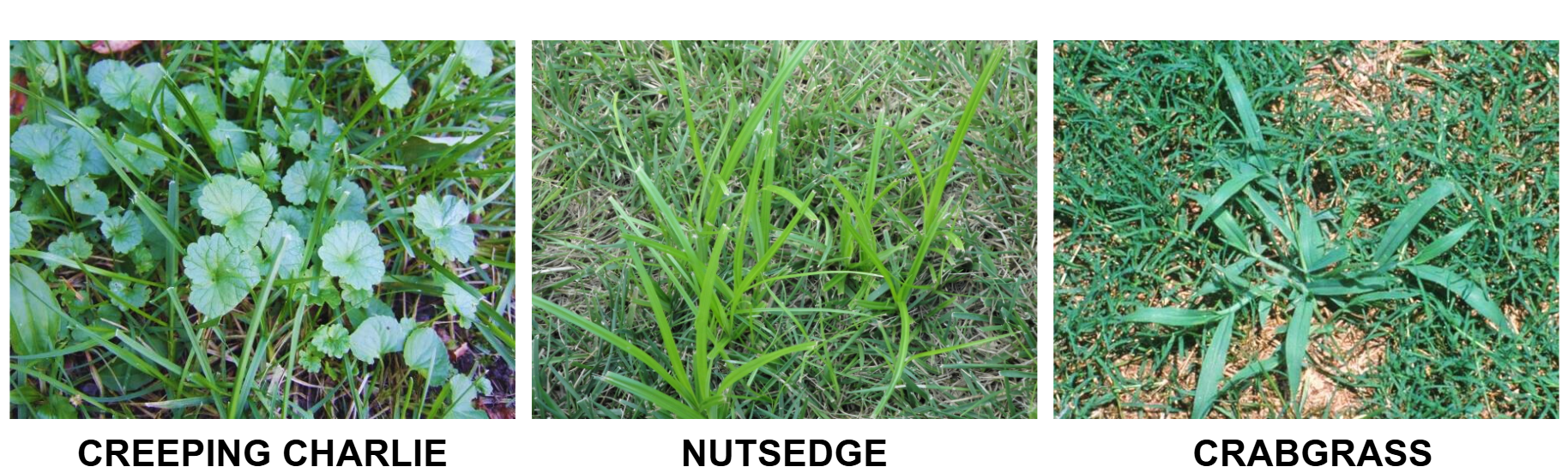
Creeping Charlie: Stubborn and Strategic
Also known as ground ivy, Creeping Charlie is a vine-like weed that thrives in shaded, moist areas and creates dense, tangled patches under the radar.
The Summer Shell:
During the heat of summer, Creeping Charlie enters a defensive “tough shell” phase, where its waxy coating and growth habit make it more resistant to treatment. You might not see fast visual changes—but don’t mistake that for inaction.
The Key Approach:
Stay persistent. Even in this resistant period, every treatment chips away at its defenses. Targeting it consistently keeps it from spreading and gaining ground. You’ll likely see the most visible progress in the fall, when the plant becomes more reactive—but the work done now is what sets us up for success then.
Nutsedge: Fast Growing, Slow to Quit
Bright green and fast to pop back after mowing, nutsedge stands out in any lawn. It’s not just a weed—it’s a sedge, which means standard broadleaf weed controls won’t affect it.
Why It’s Tricky:
Nutsedge grows from nutlets below the soil—tiny underground tubers that regenerate if disturbed. That’s why pulling it actually makes it worse by encouraging more growth.
The Key Approach:
Apply targeted sedge treatments that work over time. It’s not instant—results show as slow yellowing over 2–4 weeks, and repeat applications are often necessary due to those persistent nutlets. But the key is consistency and avoiding false fixes like plucking.
Crabgrass: Prevention Is Powerful—but Not Perfect
Crabgrass loves the same conditions we all try to avoid: heat, bare spots, sidewalk edges, and scalped mowing. It’s an annual weed that dies off in the winter, but not before leaving seeds behind to re-germinate the next spring, starting when soil temperatures reach around 55°F.
Even the best lawns can see some breakthrough, especially in “hot zones” like driveway edges, thin patches, or areas cut too short.
The Key Approach:
Crabgrass is best controlled with a pre-emergent herbicide applied in early spring, before germination begins. Once it’s popped up with mid-summer heat, a post-emergent grassy weed treatment is required. The broadleaf treatments for your typical lawn weeds are not the tool for this heavy-duty job. Post-emergent treatments are best used on small, young plants. The larger or heavier the coverage, the more difficult it is to control.
Trust the Process. Stay the Course.
Staying attentive throughout the summer is critical. The best approach includes monitoring the lawn regularly, adjusting as needed, and staying consistent with treatment. Even if weeds return due to weather or stress, ongoing care helps maintain control.
Whether you’re managing your lawn solo or with a pro, getting answers when you’re unsure is a great next step. Contact Lawn Doctor to guide you toward a plan that works for your lawn.
330-810-9749