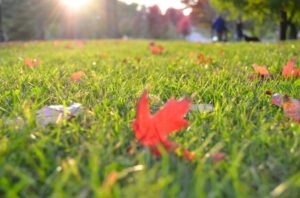
 Fall is one of the most important seasons for building a stronger, greener lawn. While growth may slow above the surface, everything beneath is still hard at work. By handling a few key tasks now—before winter sets in—you’ll be helping your lawn store nutrients, recover from summer stress, and prepare for a vibrant spring comeback.
Keep Leaves Off the Lawn
As leaves begin to fall, be sure to stay ahead of them. A layer of leaves may seem harmless, but even a thin mat can block sunlight and trap moisture, leading to rot, snow mold, or bare patches by spring. Rake regularly or mulch light layers with a mower to allow your lawn to breathe.
Fall Mowing Tips
You’ll want to continue mowing your lawn into late October or early November, depending on temperatures. Don’t lower your blades too early—maintaining a healthy height through most of fall helps support deeper root development. Once growth slows, you can drop your mowing height to around 2.5 inches for the final cut, which helps prevent winter matting or disease.
Don’t Forget Aeration
Fall is prime time for aeration—especially if your lawn struggled with compaction, thinning, or poor water absorption. Both core aeration and liquid aeration offer powerful benefits for Northeast Ohio lawns. Traditional core aeration pulls small plugs to loosen soil and open space for roots. Liquid aeration, a newer option, requires no marking or flags and conditions the entire root zone with natural ingredients. Whichever method you choose, aeration makes your fertilization and seeding go further.
If You Seeded This Fall—Keep It Moist
If you recently seeded your lawn or filled in patches, keep the soil consistently moist. Once seed sprouts, it’s very vulnerable—if it dries out, it can die before establishing. Light, frequent watering is key until germination is complete and the new grass starts to grow in strong.
When Should You Stop Mowing?
In most of Northeast Ohio, lawns continue growing until early to mid-November. Mow as long as the grass is growing—just adjust your frequency based on the slowdown. Once you’ve done a final cut around 2.5 inches, you can give the mower a rest until spring.
Don’t Skip the Final Fertilizer
A winterizing fertilizer is one of the most valuable treatments all year. This application focuses on feeding the roots, not the blades, giving your turf the reserves it needs to survive winter and green up quickly in spring. Look for a slow-release, nitrogen-rich formula applied after your last mow and before the ground freezes.
One Last Walk-Through
Before winter arrives, do a final pass over your yard: remove hoses, toys, furniture, and any debris. Clean up excess leaves, check for pooling water, and inspect for any missed bare spots you might want to seed now or plan for spring.
Fall is a short season, but it delivers long-lasting impact. By taking a few smart steps now, you’ll reduce stress, improve soil health, and position your lawn for its best season yet. If you’re looking for help with your final fertilization, aeration, or seeding—reach out to Lawn Doctor for a free quote. We’d love to help you finish the season strong
Looking Ahead to Spring
A properly prepped lawn enters spring stronger, greener, and ready to grow. You’ll spend less time fixing issues and more time enjoying the results. If you’re unsure about timing your final fertilization or preparing your lawn for the colder months, reach out—we’re here to help.