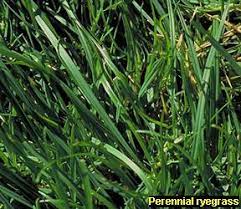
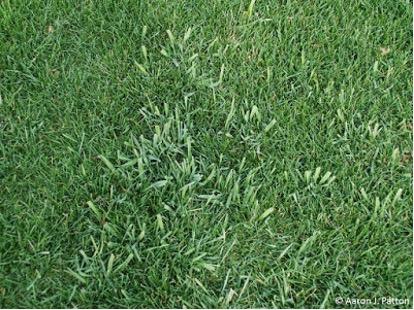
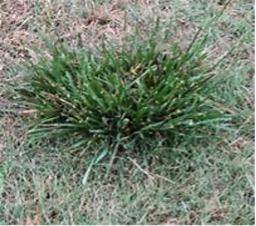
| If you have the wrong grass type, what are your options:
Option A: Leave it alone. The easiest option is to KNOW that these areas of the lawn will brown out (we are all used to our lawn going dormant in the winter) and EXPECT the browning. Care practices (HIGH mowing and good SOAK watering) can help the areas to look better. In most cases, when fall comes, you will see the areas green up and look much better.
Option B: Do something other than grass. You can make a landscape bed or plant trees/shrubs and replace the grass in the problem area.
Option C: Fight it a “little at a time.” You can fight small patches of undesirable grass a little at a time with a non-selective herbicide (gyphosate and Avenger are 2 options). This must be done cautiously with a long-handled sponge paint brush to avoid getting herbicide on the surrounding “good” grass. You should also wear proper protective equipment (gloves etc) as directed on the label. Over time, you can eliminate small patches and the “good” grass can fill in.
Option D: Agressive “Grass Replacement/Lawn Renovation” This must be done at the correct time of year! The entire area of undesirable grass AND good grass can be wiped out with a non-selective herbicide. This normally needs to be done in 2 treatments 2 weeks apart. After the 2nd treatment, heavy dethatching can be done to remove the dead grass and re-seeding with appropriate grass can be done. (You can read more about seeding timing and best practice here: July 30, 2023 Newsletter- When and How to Seed: https://conta.cc/456aFhz). It is important to be aware that herbicide treatments will NOT eliminate all roots/seeds of the undesirable grass type. Some additional “wrong” grasses will continue to come up in subsequent years and can and should be addressed on a “little at a time” basis as described in Option C.
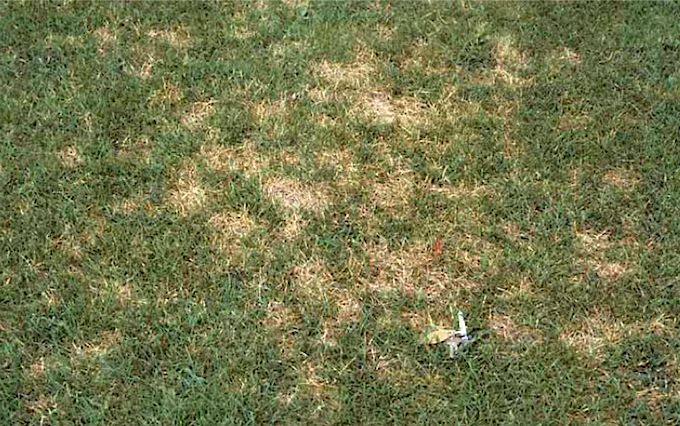
Option Z: (Not a suggested option) Fungicides. Many people will ask about or suggest treating the dollar spot fungal disease affecting the fine fescue with fungicides. This option is more of a short term “band aid.” Fungicides only temporarily stop the spread of fungal organisms. Fungal spores are always in the soil and air and will flourish when conditions are right for them. In order to slow the fungal disease, fungicides (which are also very expensive) would need to be applied every 3-4 weeks throughout the growing season and the type of fungicide used would need to be varied to avoid resistance. Over time, we have seen many fungicides that are no longer effective due to fungicide resistant varieties (similar to overuse of antibiotics). |