A lawn can receive plenty of water and fertilizer and still struggle.
In many cases, the problem is happening below the surface.
Soil compaction makes it difficult for water, nutrients, and oxygen to move through the soil and reach the roots of your grass. Over time, the root system can become shallow, turf begins to thin, and the lawn becomes much more vulnerable to heat and drought.
We see this often on properties throughout Lake Forest, IL, especially lawns with mature trees, regular foot traffic, and landscaping crews moving across the property throughout the season.
If your lawn seems to struggle no matter what you do, compaction could be part of the problem.
Here are five signs your Lake Forest lawn may benefit from core aeration.
- Your Grass Looks Thin or Weak
One of the first signs of compacted soil is thinning turf.
When soil becomes tightly packed, grass roots have a difficult time growing deeper into the ground. Instead, the roots remain closer to the surface where they have less access to moisture and nutrients.
Over time, the lawn may begin to look thin, weak, or uneven.
This can also create more opportunities for weeds to move in. Weeds often take advantage of areas where the turf is already struggling.
If your lawn seems to get thinner every year even though you are fertilizing and watering it, it may be worth looking at what is happening underneath the grass.
- Water Runs Off Instead of Soaking Into the Soil
Watering your lawn does not help much if the water cannot reach the roots.
Compacted soil can prevent water from penetrating deeply into the ground. You may notice water running across the surface, collecting in certain areas, or pooling instead of being absorbed.
In some cases, the lawn may even dry out shortly after watering because very little moisture actually made it into the root zone.
A healthy lawn needs water to move down into the soil where the roots can access it.
Core aeration helps open the soil, allowing water to penetrate more effectively and giving the lawn a better opportunity to retain the moisture it receives.
- Your Lawn Struggles During Heat and Drought Despite Watering
If you are watering consistently but your lawn still struggles during hot or dry weather, shallow roots may be part of the problem.
Compaction limits how deeply roots can grow.
When roots remain close to the surface, the grass becomes much more dependent on frequent watering and is less capable of handling periods of heat or drought.
This can be especially noticeable during a Lake Forest summer when temperatures rise and rainfall becomes inconsistent.
We often see compacted lawns dry out faster than they should, even when the homeowner is putting down plenty of water.
Core aeration helps create better conditions for deeper root development, which can make the turf more resilient during stressful weather.
- Your Lawn Gets Worse Every Year
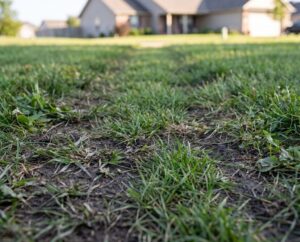
Compaction does not always create an obvious problem overnight.
Sometimes the decline happens slowly.
A lawn may look slightly thinner one year, struggle more during summer the next year, and gradually become weaker each season.
The problem is that grass needs several things to remain healthy, including water, oxygen, and nutrients.
When compacted soil prevents those essentials from reaching the root system, the lawn can slowly decline even if the homeowner is doing everything else correctly.
This is one reason a lawn can sometimes look like it has a watering, fertilizer, or even disease issue when the underlying problem is actually the soil.
Fertilizer can only do so much if the nutrients cannot move effectively through the soil and reach the roots.
- The Soil Feels Hard
One of the easiest ways to check for compaction is something homeowners can do themselves.
Try the screwdriver test.
Take a screwdriver and push it into the soil in several areas of the lawn.
If it is difficult to push into the ground, the soil may be compacted.
You can also watch what happens when you water deeply.
Does the water soak into the soil, or does it begin running off or pooling?
These simple tests can give you a good indication that the soil may need some help.
Why Lake Forest Lawns Can Become Compacted
Lake Forest properties often have characteristics that can contribute to lawn stress and soil compaction.
One of the biggest factors we see is mature trees.
Large trees compete with the surrounding turf for moisture. Their root systems can pull a significant amount of water from the soil, making already stressed grass work even harder.
Foot traffic can also contribute to compaction.
Landscapers, mowing equipment, homeowners, pets, and regular activity across the property gradually press soil particles closer together.
Over time, there is less open space in the soil for water, oxygen, nutrients, and healthy root development.
What Core Aeration Actually Does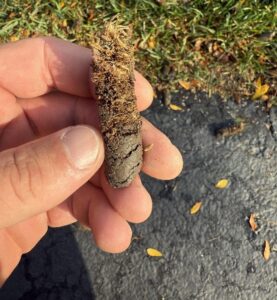
Core aeration removes small plugs of soil from the lawn.
Those openings relieve compaction and allow air, water, and nutrients to move deeper into the soil.
This gives the root system a better environment to grow.
We have seen lawns that were previously thin, weak, and quick to dry out become greener and healthier after aeration. Water is able to penetrate the soil better, nutrients can reach the root zone more effectively, and the turf has an opportunity to become thicker.
Core aeration is not a quick cosmetic fix. It improves the conditions that help the lawn grow healthier from below the surface.
Should You Pick Up the Soil Plugs?
No.
One of the most common questions we hear after aeration is whether the soil plugs should be removed. It is actually better to leave them on the lawn.
The plugs will naturally break down over time and return organic material back into the soil.
Another common misconception is that core aeration damages healthy roots.
While the process temporarily removes small sections of soil, the goal is actually to encourage deeper and healthier root development by improving the growing environment around those roots.
When Is the Best Time to Core Aerate in Lake Forest?
For cool-season lawns in our area, fall is an excellent time for core aeration.
Cooler temperatures help reduce stress on the turf and allow the lawn to recover more comfortably after the aeration process.
Fall is also an ideal time to help the lawn recover from the stress it experienced during summer.
If your lawn struggled through heat, drought, or heavy traffic, aeration can help improve the soil conditions going into the cooler part of the growing season.
Should You Overseed After Core Aeration?
Not every lawn requires seeding, but core aeration and overseeding can work extremely well together.
If it has been several years since your lawn has had new seed introduced, overseeding may be worth considering.
Grass plants have a life cycle, and older turf can naturally thin over time.
Aeration creates openings in the soil that improve seed-to-soil contact, while overseeding introduces new grass plants that can help improve density.
We also recommend providing the lawn with proper nutrition after aeration. Fertilizer can take advantage of the newly opened soil and help support recovery and new growth.
Is Core Aeration Right for Your Lake Forest Lawn?
If your lawn is thin, dries quickly, struggles during hot weather, or does not seem to respond well to watering and fertilizer, compacted soil may be contributing to the problem.
Start with a few simple checks.
Push a screwdriver into the soil. Watch how your lawn absorbs water. Look for areas where turf continues to thin or weeds are beginning to take over.
Sometimes improving a lawn is not about adding more water or more fertilizer.
It is about creating better soil conditions so the grass can actually use what you are giving it.
Core aeration can help relieve compaction, improve water and nutrient movement, encourage deeper roots, and give your lawn a stronger foundation for healthier growth.