A Smarter Alternative to Core Aeration
Many Houston lawns struggle with heavy clay soil compaction, which prevents water, oxygen, and nutrients from reaching the grass roots. When soil becomes compacted, lawns often appear thin, weak, and more susceptible to heat stress, weeds, and disease.
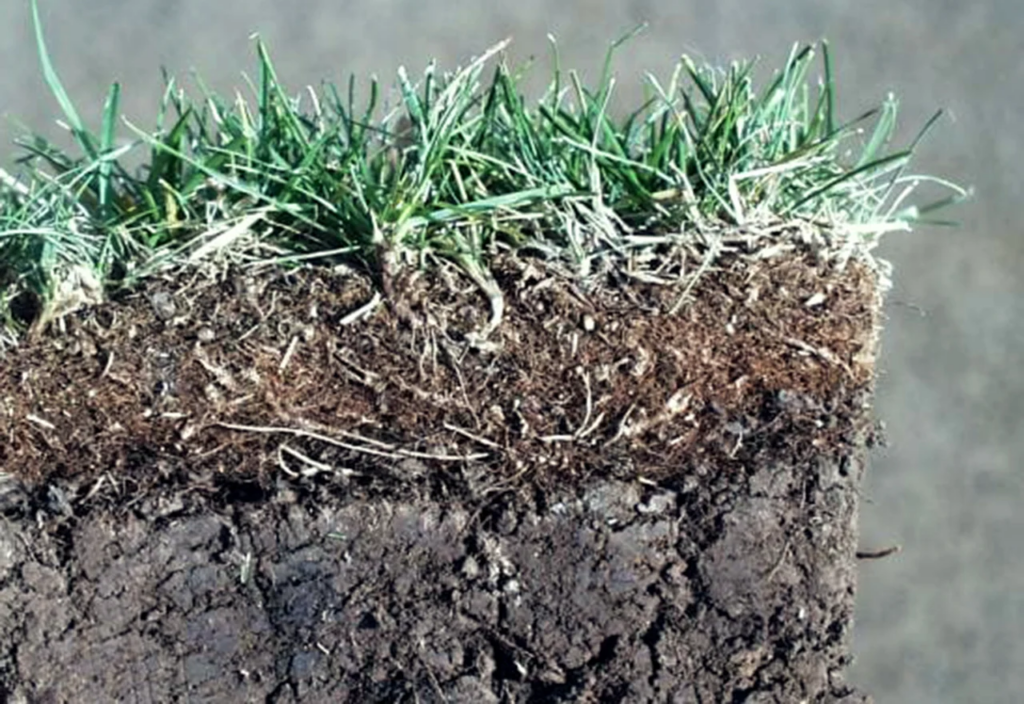
Traditionally, homeowners have relied on mechanical core aeration, where machines pull small plugs of soil from the lawn. While this method can provide some relief, it can also be disruptive, leaving plugs scattered across the lawn and addressing only the small areas where holes are created.
Liquid aeration offers a more advanced and less disruptive solution.
How Liquid Aeration Works
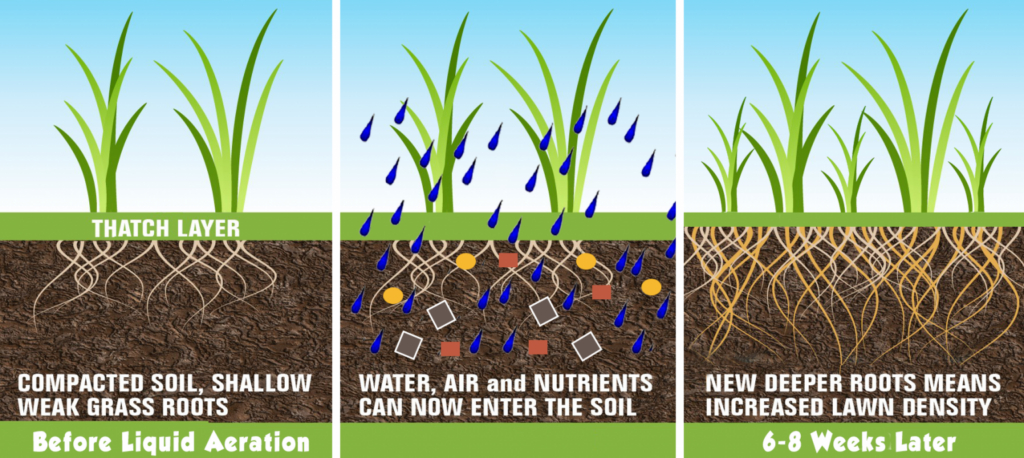
Liquid aeration uses specialized soil-conditioning treatments that penetrate deep into the soil to improve structure and reduce compaction. Our treatment uses a premium blend of advanced surfactants and carbon-rich soil conditioners designed specifically for dense clay soils like those found throughout Houston. The high-performance surfactants help loosen tightly packed clay particles, allowing water, oxygen, and nutrients to move more freely through the soil and reach the root zone where they are needed most. At the same time, the treatment includes a carbon-rich soil acidifier that increases soil carbon levels and helps release binding salts that cause clay soils to clump together. By reducing these bonds, the soil becomes more open and porous, allowing roots to expand and grow deeper.
Benefits of Liquid Aeration in Houston
Liquid aeration provides several important advantages over traditional core aeration:
Improves soil structure across the entire lawn
Unlike mechanical aeration that only affects the holes created by the machine, liquid aeration spreads through the soil profile for more uniform improvement.
Enhances water and nutrient penetration
Looser soil allows irrigation and fertilizer to move efficiently into the root zone.
Promotes deeper, stronger roots
Reduced compaction allows roots to grow deeper, making the lawn more resilient during Houston’s intense summer heat.
No messy soil plugs or lawn disruption
Liquid aeration leaves the lawn smooth and usable immediately after application.
Supports healthier soil biology
The carbon-rich components improve soil health and encourage beneficial microbial activity.
Not All Liquid Aeration Treatments Are the Same
Some lawn care providers advertise “liquid aeration” using very basic soil wetting agents or simple detergents. While these may temporarily improve water penetration, they do not meaningfully improve soil structure or clay compaction.
Professional liquid aeration programs use specialized soil-conditioning chemistry designed to break down clay binding and improve long-term soil health.
A Better Approach for Houston Clay Soils
Because Houston lawns commonly grow in dense, salt-binding clay soils, improving soil structure is essential for achieving a thick, healthy lawn.
Liquid aeration helps create a more open soil structure so your lawn can better absorb water, fertilizer, and oxygen — supporting stronger root development and healthier turf.
When combined with proper fertilization, weed control, and irrigation, liquid aeration helps create the foundation for a greener, more resilient lawn.
Liquid Aeration FAQ
What is liquid aeration?
Liquid aeration is a soil conditioning treatment that helps loosen compacted soil and improve the movement of water, air, and nutrients into the root zone. Instead of mechanically removing soil plugs like traditional core aeration, liquid aeration uses specialized surfactants and soil conditioners that penetrate the soil and improve its structure from within.
How does liquid aeration work?
Liquid aeration works by applying a blend of advanced soil-conditioning surfactants and carbon-rich soil amendments that penetrate the soil surface.
The surfactants help separate tightly packed clay particles, allowing water and oxygen to move deeper into the soil. At the same time, the carbon-rich components help increase soil carbon and release binding salts that cause clay soils to clump together. This process gradually improves soil structure and allows grass roots to grow deeper and stronger.
Is liquid aeration better than core aeration?
Both methods can help reduce soil compaction, but they work differently.
Core aeration
- Removes plugs of soil from the lawn
- Provides temporary relief in specific areas where holes are created
- Leaves plug the soil on the lawn surface
Liquid aeration
- Penetrates the soil across the entire lawn
- Improves soil structure at a microscopic level
- No disruption or soil plugs left on the lawn
For Houston’s heavy clay soils, liquid aeration can be a very effective alternative because it helps loosen clay particles and improve overall soil structure.
Does liquid aeration really work in clay soil?
Yes. Liquid aeration is particularly beneficial for dense clay soils like those common in Houston.
Clay soils tend to compact easily and can trap salts that bind soil particles together. Liquid aeration treatments help break these bonds and improve soil porosity, allowing better water infiltration and deeper root growth.
How long does liquid aeration take to work?
Liquid aeration begins working soon after it penetrates the soil. Many homeowners start noticing improvements in water absorption and lawn response within a few weeks, while deeper soil structure improvements develop gradually over time.
Consistent treatments as part of a lawn care program can continue improving soil conditions season after season.
Does liquid aeration leave holes in the lawn?
No. One of the advantages of liquid aeration is that it does not disturb the lawn surface. Unlike core aeration, there are no soil plugs, holes, or lawn disruption, so the lawn can be used immediately after treatment.
When is the best time to apply liquid aeration?
Liquid aeration can typically be applied throughout the growing season whenever the lawn is actively growing, and soil compaction is limiting root development.
Many homeowners schedule treatments in spring and early fall , when lawns benefit most from improved nutrient and water absorption.
Is liquid aeration safe for my lawn?
Yes. Professional liquid aeration treatments are designed to be safe for turfgrass while improving soil conditions. The treatment works within the soil to improve structure and root development without damaging the lawn.
Are all liquid aeration treatments the same?
No. Not all liquid aeration products use the same technology.
Some lawn care providers apply basic wetting agents or simple detergents and call them liquid aeration. While these products may temporarily improve water penetration, they do not significantly improve the structure of compacted clay soil.
Professional liquid aeration programs use advanced soil-conditioning chemistry designed to loosen clay soils, increase soil carbon, and improve long-term soil health.
Do I still need fertilization if I use liquid aeration?
Yes. Liquid aeration improves how well your lawn absorbs water and nutrients, but fertilization is still needed to supply those nutrients.
When combined with a proper fertilization and weed control program, liquid aeration helps maximize the effectiveness of lawn treatments.
Can liquid aeration help my lawn during Houston summers?
Yes. Houston summers bring intense heat and drought stress. Lawns with compacted soil struggle to absorb water efficiently.
By improving soil structure and root growth, liquid aeration helps lawns use water more efficiently and better tolerate summer stress.